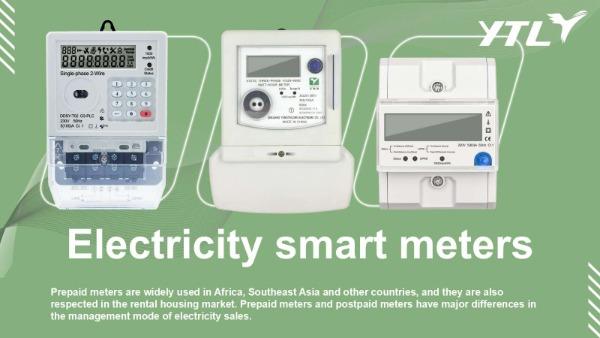
AMI Meters Explained: How Advanced Metering Infrastructure Works
Advanced Metering Infrastructure, commonly known as AMI, is changing the way electricity consumption is measured, reported, and managed.
Unlike traditional electricity meters that usually depend on periodic manual readings, an AMI system can collect electricity usage information electronically and communicate that information to the utility company. This gives electricity providers access to more detailed consumption data and allows many meter-related activities to be handled remotely.
For consumers, the technology can support more accurate billing, better visibility into electricity usage, and faster handling of certain meter-related issues. For electricity companies, AMI provides an important foundation for modern grid management and smart electricity services.
If you are a MEPCO electricity user, you may have heard the term AMI meter and wondered, “Yeh AMI meter hota kya hai aur is ka faida kya hai?” AMI stands for Advanced Metering Infrastructure, which is a modern electricity metering system designed to send meter information electronically instead of relying only on traditional manual meter reading. In simple words, an AMI meter can communicate your electricity usage information to the electricity company, helping make meter reading, monitoring, and billing more efficient. For MEPCO users, this technology can make it easier to understand how electricity consumption is recorded and how your monthly bill is prepared. Agar aap soch rahe hain ke smart meter mein aisa kya khaas hai, to tension ki koi baat nahi, because the basic idea is quite simple. In this guide, we will explain how AMI meters work, how they are different from traditional meters, what information they can provide, and what MEPCO consumers should know about this modern metering technology. Yani seedhi si baat hai, AMI meter ka maqsad meter reading ko zyada smart, automatic aur efficient banana hai, taake bijli ki usage ko behtar tareeqe se record aur manage kiya ja sake.
AMI Meter Quick Overview
| Feature | What It Means |
|---|---|
| Full meaning | Advanced Metering Infrastructure |
| Main function | Automatically measures and communicates electricity consumption data |
| Meter reading | Electronic and automated |
| Communication | Can support two-way communication |
| Billing | Provides detailed consumption information for billing |
| Monitoring | Allows utilities to monitor meters remotely |
| Smart grid role | Provides data needed for modern grid management |
AMI in Simple Terms
Electricity Meter → Communication Network → Utility System → Data Analysis → Billing & Grid Management
This basic process illustrates how information can move from a customer’s meter to the electricity provider.
What Is an AMI Meter?
An AMI meter is an advanced electricity meter that forms part of an Advanced Metering Infrastructure system.
The meter records electricity consumption electronically and can communicate information through a connected communications network. Depending on the particular AMI technology being used, information may be transmitted to the electricity provider at regular intervals or when specific events occur.
This is different from a conventional meter-reading process, where a meter reader may physically visit a property and record the displayed consumption.
An AMI system can provide electricity companies with much more detailed information about electricity consumption and meter conditions.
What Does AMI Stand For?
AMI stands for Advanced Metering Infrastructure.
The term describes more than the physical meter installed at a customer’s property. It refers to the wider technology infrastructure used to collect, communicate, store, and manage electricity consumption information.
An AMI system generally brings together four major elements:
- Smart electricity meters
- Communication networks
- Data collection systems
- Meter data management systems
Together, these components allow electricity providers to collect and process information from large numbers of electricity meters.
What Are the Main Components of an AMI System?
1. Smart Electricity Meter
The smart meter is installed at the customer’s property.
It measures electricity consumption and can record information such as energy usage over different periods. Depending on the meter’s capabilities, it may also record voltage, power quality information, outages, and other operational data.
2. Communication Network
The communication network allows information to move between meters and the utility’s systems.
Different AMI deployments can use different communication technologies. These may include radio-based networks, cellular communications, power-line communication, or other technologies.
The exact communication method depends on the electricity provider and the infrastructure available in a particular area.
3. Data Collection System
A central collection system receives information from many meters.
Instead of handling each meter individually, the utility can use the system to gather information from a large number of customer accounts.
4. Meter Data Management System
The collected information is processed and organized by utility data-management systems.
These systems can help electricity companies use meter data for billing, consumption analysis, customer services, outage management, and other operational activities.
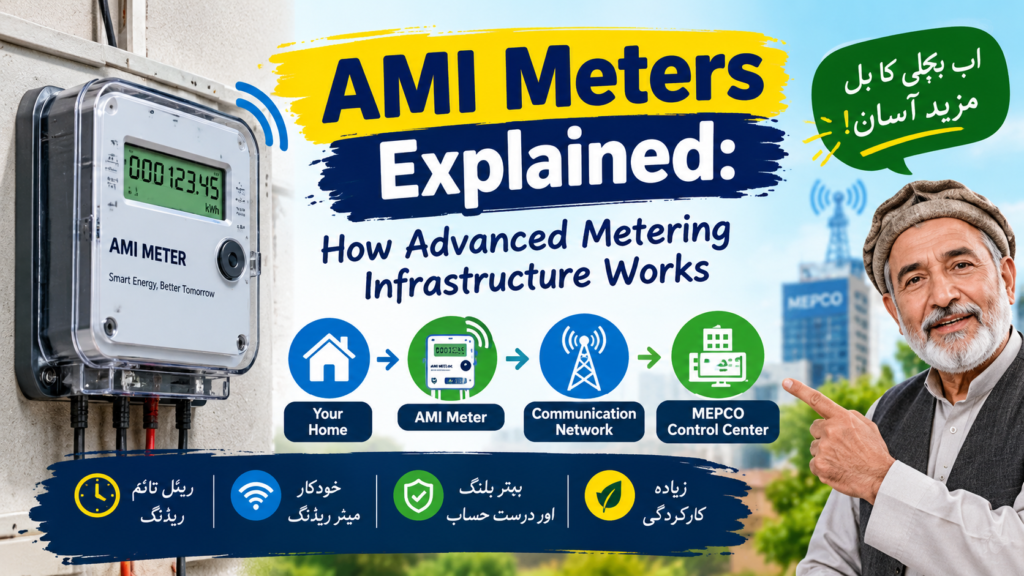
How Does an AMI Meter Work?
The operation of an AMI system can be understood as a series of connected steps.
Step 1: The Meter Measures Electricity Usage
The AMI meter continuously or periodically measures electricity consumption.
Depending on the meter, it may record consumption at different intervals rather than providing only one cumulative reading.
Step 2: The Meter Records the Information
The meter stores consumption information and other relevant operational data.
This creates a more detailed record of how electricity is being used over time.
Step 3: Data Is Communicated
The meter communicates relevant information through the available AMI communication network.
This reduces the need for a worker to physically visit the meter simply to obtain a reading.
Step 4: The Utility Receives the Data
The electricity provider receives information from connected meters through its AMI infrastructure.
The information can then be associated with the appropriate customer account.
Step 5: The Data Is Processed
Utility systems process the incoming information.
The data may be used for billing, consumption analysis, outage management, network monitoring, and other operational functions.
Step 6: The Information Supports Electricity Services
Once processed, the information can support several activities, including electricity billing, system monitoring, demand management, and smart-grid operations.
AMI Meter Working Process
Suggested Infographic
1. Measure
AMI meter records electricity consumption
↓
2. Store
Meter retains consumption and operational information
↓
3. Communicate
Data travels through the communication network
↓
4. Collect
Utility systems receive information from multiple meters
↓
5. Analyze
Data is processed and reviewed
↓
6. Use
Information supports billing, monitoring and grid management
This infographic would work well near the middle of the article because it gives readers a visual explanation of the entire process.
Traditional Electricity Meter vs AMI Meter
The biggest difference between conventional metering and AMI is the amount of information that can be collected and how that information is communicated.
| Feature | Traditional Meter | AMI Meter |
|---|---|---|
| Meter reading | Often manual | Automated |
| Communication | Limited or none | Network-based communication |
| Consumption information | Usually less detailed | More detailed usage information |
| Remote monitoring | Limited | Supported |
| Data collection | Periodic | Can be frequent or scheduled |
| Utility interaction | Often requires field visits | Many functions can be performed remotely |
| Smart-grid integration | Limited | Designed to support smart-grid operations |
| Outage information | May depend on customer reports or other systems | Can support automated outage detection |
Visual Comparison
Traditional Meter
Customer Meter
↓
Manual Reading
↓
Utility Record
↓
Billing
AMI Meter
Customer Meter
↓
Automatic Data Collection
↓
Communication Network
↓
Utility System
↓
Billing + Monitoring + Grid Management
What Information Can an AMI Meter Collect?
The exact capabilities depend on the meter model and the electricity provider’s AMI infrastructure.
An advanced meter may collect information such as:
- Electricity consumption
- Consumption over different time intervals
- Voltage information
- Meter status
- Power-quality information
- Outage or restoration events
- Tamper-related events
- Other operational measurements
The availability and use of specific data varies between electricity systems.
Benefits of AMI Meters for Consumers
AMI technology can provide several potential benefits for electricity customers.
More Accurate Billing Information
Automated meter readings can reduce problems associated with manual meter-reading errors.
Because consumption information is collected electronically, the electricity provider can use actual meter data instead of relying on estimates where appropriate.
Reduced Dependence on Physical Meter Reading
An AMI system can transmit meter information electronically, reducing the need for routine physical visits solely to obtain meter readings.
Better Understanding of Electricity Consumption
Where detailed consumption information is made available to customers, consumers can gain a better understanding of when and how they use electricity.
This can help households identify periods of higher electricity consumption.
Faster Identification of Certain Meter Issues
AMI systems can communicate specific meter events or abnormal conditions to utility systems.
This may help electricity companies investigate certain issues more quickly.
Support for Digital Electricity Services
AMI infrastructure can provide the data required for modern online and digital electricity services.
Benefits of AMI for Electricity Companies
The advantages of AMI extend beyond individual consumers.
Improved Grid Monitoring
Electricity providers can receive more detailed information about conditions across their distribution networks.
Better Load Management
Consumption information can help utilities understand demand patterns and plan electricity distribution more effectively.
Faster Outage Detection
AMI systems can provide information about certain outages and restoration events, potentially helping utilities identify affected areas more quickly.
Electricity Loss and Tamper Detection
AMI technology can provide data that helps utilities investigate unusual consumption patterns and certain tampering events.
However, the ability to identify electricity theft depends on the specific AMI system, available data, and additional investigation.
Remote Meter Management
Some meter operations can be performed remotely, reducing the need for field visits.
Support for Smart Grid Development
AMI provides an important source of information for electricity networks that are becoming more automated and data-driven.
Does an AMI Meter Improve Billing Accuracy?
AMI can contribute to improved billing accuracy because electricity consumption information can be collected electronically and transmitted to utility systems.
Traditional manual reading processes can involve human error, inaccessible meters, estimated readings, or delays between the physical reading and billing process.
With AMI, the utility can receive electronic meter data directly from the meter.
However, an AMI meter does not guarantee that every billing problem will disappear. Billing also depends on the accuracy of the meter, the communication infrastructure, data processing systems, tariffs, account information, and other parts of the utility’s billing process.
Do AMI Meters Eliminate Estimated Bills?
AMI can reduce the need for estimated readings because the utility can receive actual consumption data electronically.
However, estimated billing can still occur in certain circumstances, such as communication failures, technical problems, data issues, or other exceptional situations.
Therefore, installing an AMI meter does not necessarily guarantee that every future bill will always be based on successfully transmitted meter data.
Do AMI Meters Increase Electricity Bills?
An AMI meter does not inherently increase the amount of electricity a customer consumes.
The meter’s primary purpose is to measure electricity usage and communicate information about that usage.
A customer’s electricity bill can change because of factors such as:
- Increased electricity consumption
- Changes in electricity tariffs
- Taxes and government charges
- Fuel or other applicable adjustments
- Changes in billing periods
- Other charges included in the electricity bill
The introduction of an AMI meter should therefore be distinguished from changes in electricity prices or tariffs.
Can AMI Meters Be Read Remotely?
Yes. Remote communication is one of the central features of an AMI system.
Instead of requiring a meter reader to physically visit the property for every routine reading, the meter can communicate its information through the AMI network.
The exact frequency and type of information transmitted depends on the utility’s system.
Can AMI Meters Be Controlled Remotely?
Some AMI systems support two-way communication, which means information can travel both from the meter to the utility and from the utility to the meter.
Depending on the meter and utility infrastructure, two-way communication can support certain remote operations and configuration functions.
The specific capabilities vary by electricity provider and meter model.
What Is Two-Way Communication in AMI?
Two-way communication means that the communication system can transmit information in both directions.
Traditional Approach
Meter → Utility
The meter primarily provides information to the utility.
AMI Approach
Meter ↔ Utility
Information can travel between the meter and the utility’s systems.
This capability is important because it can support advanced functions beyond simply collecting meter readings.
AMI Meters and Smart Grids
AMI is an important component of modern smart-grid infrastructure.
A smart grid uses digital technology, communication systems, sensors, automation, and data to improve the way electricity networks are monitored and managed.
AMI meters provide valuable information from the customer side of the electricity network.
Suggested Smart Grid Diagram
AMI Meters
↓
Communication Network
↓
Utility Data Systems
↓
Grid Monitoring & Analysis
↓
Smart Grid Operations
↓
Improved Network Management
The AMI meter is therefore not the entire smart grid. It is one important part of a much larger digital electricity system.
How AMI Can Help With Outages
Electricity outages can be difficult to locate when utilities have limited information from individual customer connections.
AMI systems can provide information about meter status and certain outage or restoration events.
This can give electricity companies additional information when investigating network problems.
For example, information from multiple meters can help utilities understand whether a problem may affect one customer or a larger group of connections.
AMI data does not replace physical inspection and repair work, but it can provide useful information before and during field operations.
AMI and Electricity Theft Detection
Electricity companies can use advanced meter information to identify unusual consumption patterns and investigate potential tampering.
AMI meters may also be capable of recording certain events associated with meter interference.
However, unusual consumption does not automatically prove electricity theft. Utility companies generally need to examine the available evidence and follow their applicable procedures before reaching a conclusion.
AMI Meter Data and Consumer Privacy
Because AMI systems can generate more detailed electricity consumption information, data management and privacy are important considerations.
Consumption information can reveal patterns about how electricity is used at a property.
Electricity providers therefore need appropriate systems and policies for handling customer information.
The exact privacy rules and data practices vary by country, regulator, electricity provider, and applicable law.
Common Challenges of AMI Meter Systems
AMI provides significant technological capabilities, but implementation can also involve challenges.
Communication Problems
A meter may occasionally have difficulty communicating with the utility system because of network or infrastructure problems.
Installation Costs
Rolling out AMI across a large electricity network requires investment in meters, communication infrastructure, software, data systems, and installation.
Data Management
Millions of meters can generate large quantities of information that utilities must securely process and manage.
Customer Education
Consumers may need information about how the new meters work and what changes they should expect in billing and electricity services.
AMI Meter Benefits at a Glance
| Area | Potential Benefit |
|---|---|
| Billing | More direct access to meter data |
| Meter reading | Reduced dependence on manual readings |
| Customer information | Better visibility into electricity usage |
| Outage management | Additional information about meter status |
| Grid management | More detailed network data |
| Load management | Better understanding of demand patterns |
| Remote services | Support for selected remote operations |
| Smart grid | Provides important data infrastructure |
Suggested AMI Benefits Chart
A simple visual chart can be placed here:
| AMI Capability | Consumer Impact | Utility Impact |
|---|---|---|
| Automated readings | Less dependence on manual readings | More efficient data collection |
| Usage data | Better consumption visibility | Better demand analysis |
| Remote communication | Faster information exchange | Remote monitoring capabilities |
| Outage information | Potentially faster issue identification | Improved outage management |
| Smart-grid data | Access to modern electricity services | Better network planning |
Frequently Asked Questions About AMI Meters
What does AMI stand for?
AMI stands for Advanced Metering Infrastructure. It refers to the technology infrastructure used to automatically collect, communicate, and manage electricity meter information.
Is an AMI meter the same as a smart meter?
An AMI meter is a type of advanced smart metering technology. The term AMI generally refers to the complete infrastructure surrounding the meter, including communication and data-management systems, rather than only the physical meter.
How does an AMI meter work?
An AMI meter measures electricity consumption, records the information, communicates the data through a network, and sends it to utility systems for processing and use.
Does an AMI meter read electricity automatically?
Yes. Automated meter reading is one of the main functions of an AMI system.
Can an AMI meter communicate with the electricity company?
Yes. Communication between the meter and utility systems is a central feature of AMI.
What is two-way communication in an AMI system?
Two-way communication means that information can move both from the meter to the utility and from the utility to the meter.
Does an AMI meter make electricity more expensive?
The meter itself does not determine the price of electricity. Electricity costs depend on applicable tariffs, consumption, taxes, adjustments, and other charges.
Can an AMI meter improve billing accuracy?
AMI can support more accurate billing by providing electronically collected meter data and reducing reliance on manual readings.
Can AMI meters eliminate estimated electricity bills?
They can reduce the need for estimated readings, but estimated bills may still occur because of communication failures, technical issues, data problems, or other circumstances.
Can AMI meters detect electricity theft?
AMI systems can provide information that helps utilities identify unusual consumption patterns or certain meter events. Further investigation may be required to determine whether theft or tampering has occurred.
Can AMI meters detect power outages?
Some AMI systems can communicate outage and restoration information to the utility, giving the provider additional information for outage management.
Can electricity companies read AMI meters remotely?
Yes. Remote data collection is one of the main purposes of AMI technology.
Does an AMI meter require a person to visit the property?
Routine meter reading may not require a physical visit when the AMI system is operating correctly. However, field visits can still be necessary for installation, maintenance, repairs, inspections, or other work.
Does AMI require an internet connection inside my home?
Not necessarily. AMI meters use the communication technology selected by the electricity provider. The communication network may operate through different technologies and does not necessarily depend on the customer’s household internet connection.
Is AMI the same thing as a smart grid?
No. AMI is one component of a smart-grid ecosystem. A smart grid includes many other technologies, systems, communications networks, automation tools, and grid-management systems.
What happens if an AMI meter loses communication?
The meter can generally continue measuring electricity locally, while communication with the utility may be temporarily unavailable. The exact behavior depends on the meter and the utility’s system.
Why are electricity companies installing AMI meters?
Utilities are deploying AMI to modernize meter reading, improve access to consumption information, support billing processes, improve network monitoring, and provide infrastructure for smart-grid services.
AMI meters represent a major shift from traditional electricity measurement toward a more connected and data-driven electricity system.
The technology combines advanced meters, communication networks, data collection platforms, and management systems to create a continuous flow of information between electricity customers and utilities.
For consumers, the most noticeable benefits can include automated meter readings, improved access to consumption information, and support for more modern electricity services. For utilities, AMI can provide valuable information for billing, outage management, network monitoring, demand analysis, and smart-grid development.
As electricity networks become increasingly digital, AMI is likely to remain an important